
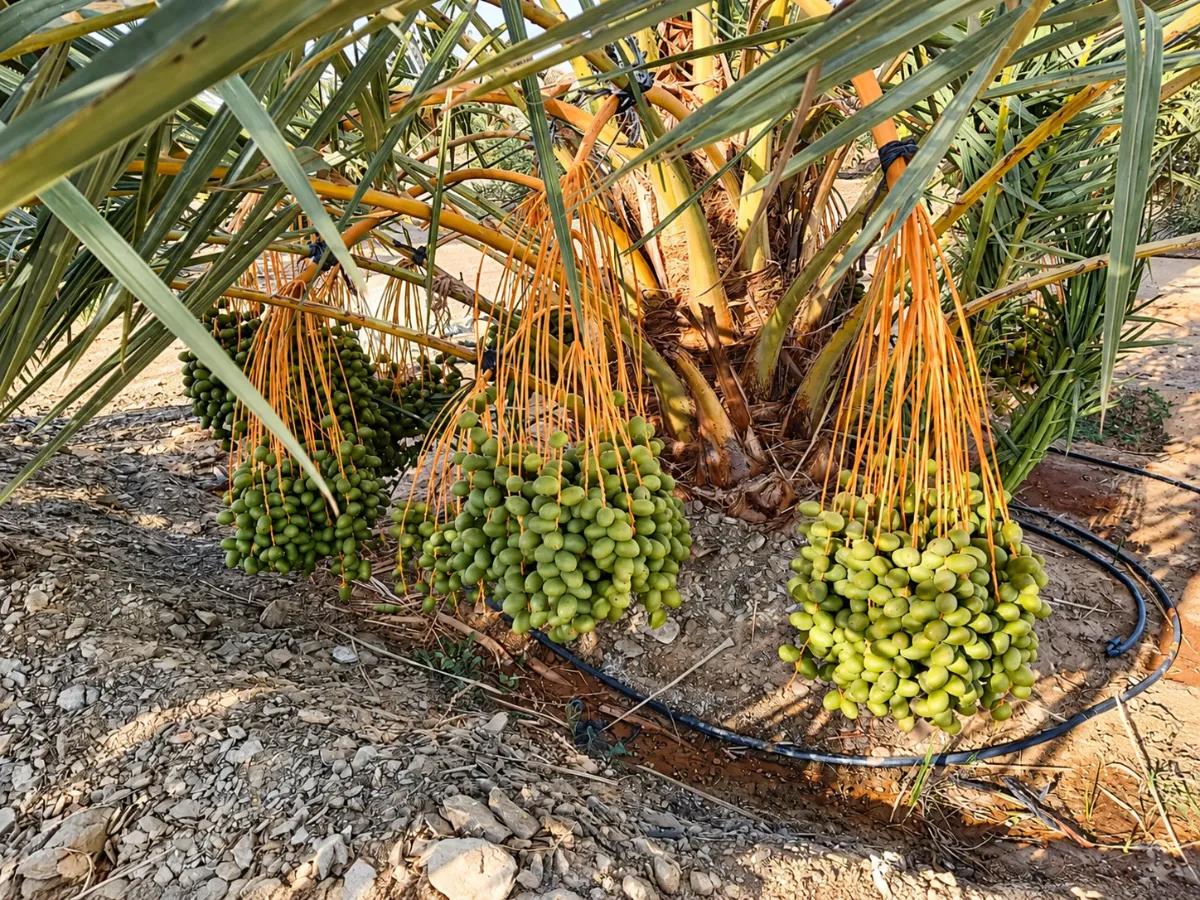
Ask anyone considering agricultural investment why they’d choose date palms specifically, and they’ll most likely start by telling you about the palm’s lifespan.
A Steady Asset That Keeps Growing
With seasonal crops, you plant and harvest, and once the crop is sold, all you’re left with is the land, and the cycle starts over.
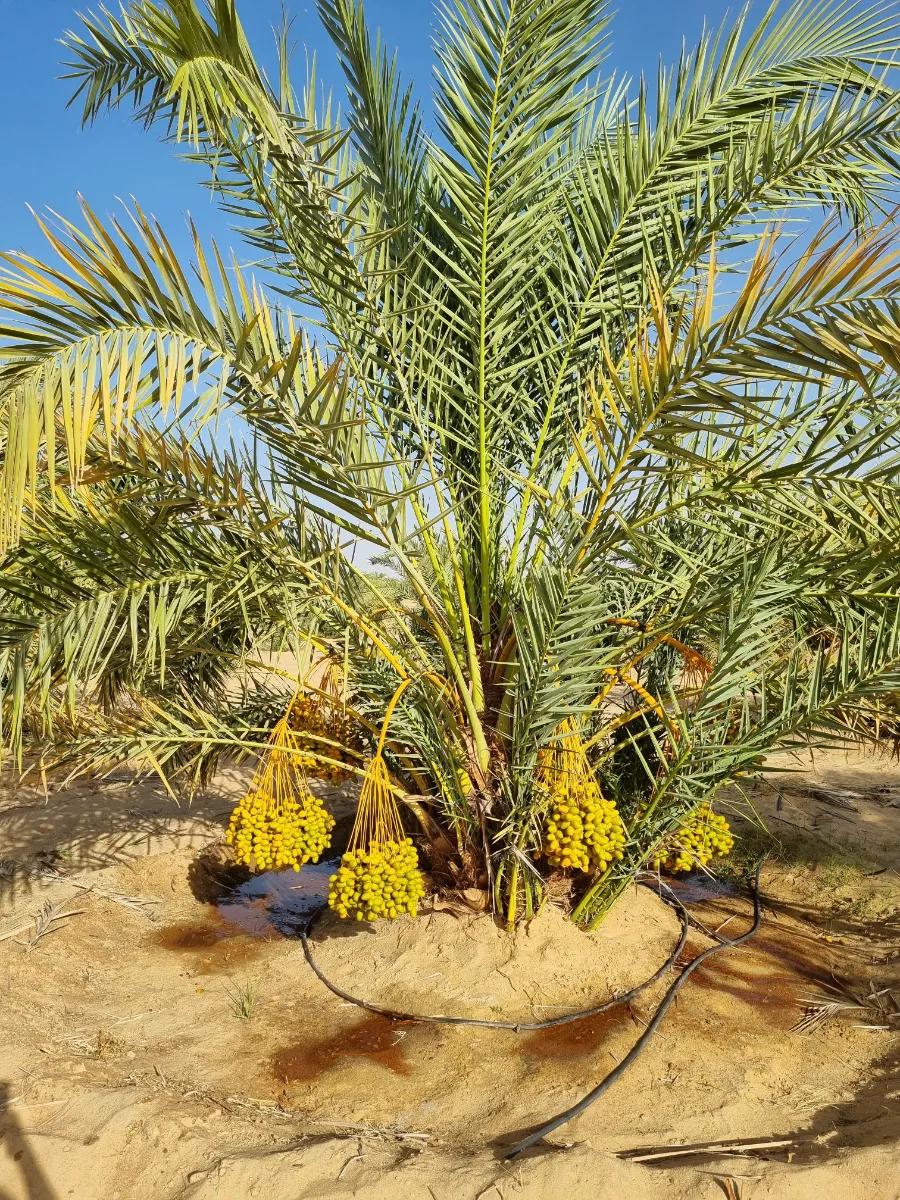
A date palm stays in the ground and keeps working for you for more than 70 years if it’s properly cared for, and its production increases gradually with age until it reaches peak yield. What you’re investing in here grows year after year.
That’s why we say Nakheel Basseqat is a steady asset that keeps growing.
Demand and Marketing
Dates are in demand in most markets all year round, which gives them relatively stable demand compared with other crops. Medjool in particular, known as the king of dates, is among the highest-value and most sought-after varieties, and it’s the variety we grow at Basseqat.
Medjool is an export commodity, and its price is tied to the global market, not just the local one. Its actual value also rises with the quality of cultivation, sorting, and marketing.
At Nakheel Basseqat, the company markets and sells the crop.
The Challenges You Need to Factor In
Like any real agricultural investment, this one comes with challenges you should know about. The first harvest season begins about 4 years after planting, and production increases gradually after that. There are also climate and operational risks that can affect the crop, and prices that change from season to season.
That’s why management is a core part of the investment itself. At Nakheel Basseqat, the company is responsible for planting, care, operations, and sales from day one, and you don’t need to know anything about palm farming to invest. The minimum is one feddan (an Egyptian unit of land, about 1.04 acres), and its price covers the land and all cultivation and management costs, with no separate annual maintenance fees.
Your part is to follow along. You receive regular photo reports on the state of the farm and the work that’s been done, and you can request a meeting or visit the land yourself.
Before the Offshoot Goes Into the Ground
Most of the work in a palm project happens before planting, and that’s what we did in the project before the first offshoot was planted.
We started with water. We drilled the wells, analyzed the water and confirmed it was suitable for palms, and built two settling basins with a total capacity of 30,000 cubic meters. They clear sediment from the water and serve as the project’s water security. All operations run on solar power, to lower operating costs over the long term.
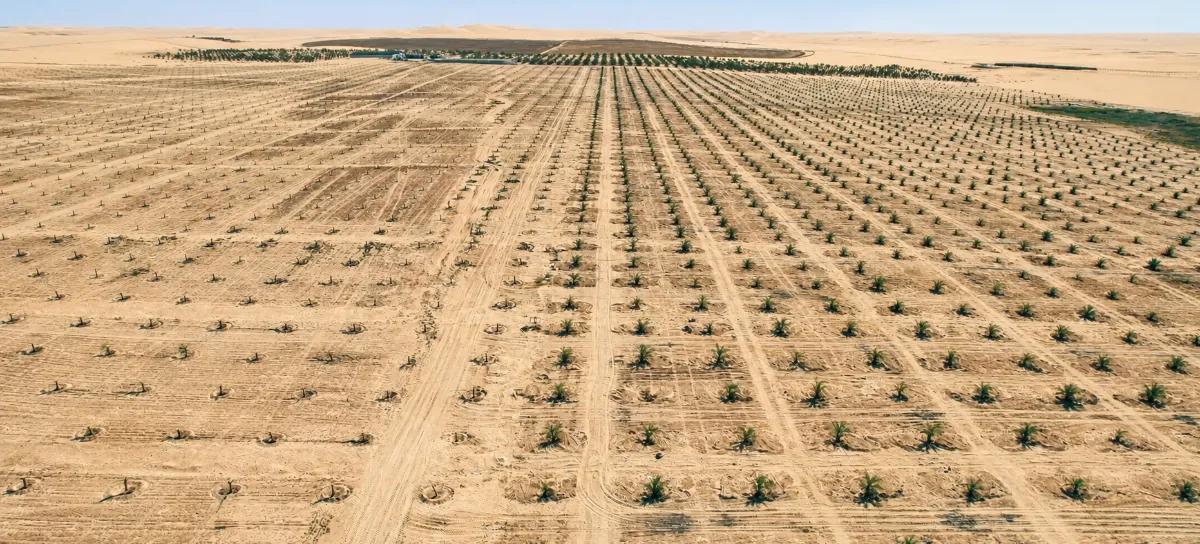
Next, we installed the main and secondary irrigation networks and tested all of them, so that every offshoot gets exactly the water it needs. The land surveying team marked the location of every planting pit and calculated the spacing between them, and every pit was prepared with compost and fertilizer and left to cure with the soil before planting.
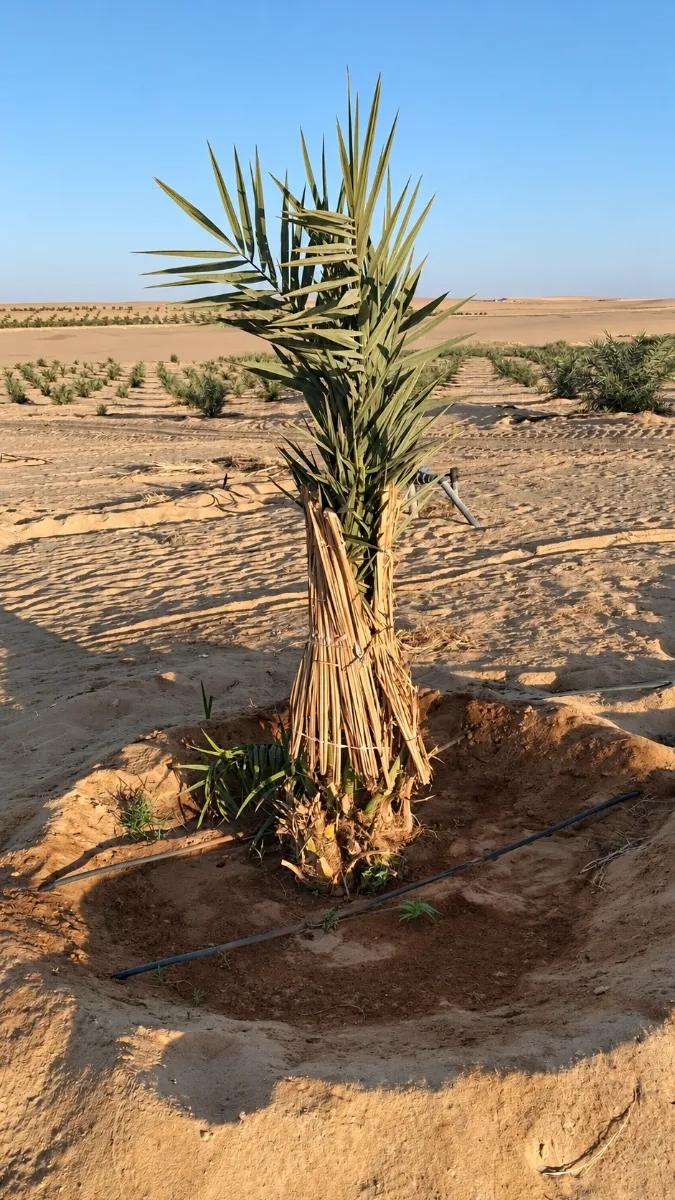
And finally, the offshoots themselves. We select healthy ones, free of fungal infection and weevils, with strong roots, and we disinfect them with fungicide and insecticide before planting.
From Idea to Land
The Nakheel Basseqat farm is in Farafra, in the New Valley Governorate, on land covering 1,033 feddans (about 1,072 acres).
We chose Farafra because we have real operating and farming experience there, and the site was selected after water and soil analyses.
The infrastructure is in place and running: wells, irrigation basins, solar power, a backup diesel generator, a road network, and an irrigation network. That’s something worth asking about in any project.
Nakheel Basseqat
If this idea caught your attention, you can learn how Basseqat works in detail, or request the investment details directly, with no pressure.